Gardeners in Heston TW5 guide to small front garden makeovers
If your front garden in Heston TW5 feels a bit tired, cramped, or just not worth the effort anymore, you are not alone. Small front gardens can be tricky. They need to look good, cope with everyday use, and still feel welcoming when you walk up to the door with bags, bins, bikes, or muddy shoes after a wet London day. This Gardeners in Heston TW5 guide to small front garden makeovers is here to make the whole process simpler, clearer, and more achievable.
The good news? You do not need a huge budget or a big plot to make a strong difference. With the right planting, a sensible layout, and a few well-chosen finishes, even a modest front garden can feel brighter, tidier, and more put-together. In practice, the best small makeovers are usually the ones that solve a few everyday problems at once: poor first impressions, awkward access, patchy planting, and a general lack of structure. Let's get into it.
Table of Contents
- Why Gardeners in Heston TW5 guide to small front garden makeovers Matters
- How Gardeners in Heston TW5 guide to small front garden makeovers Works
- Key Benefits and Practical Advantages
- Who This Is For and When It Makes Sense
- Step-by-Step Guidance
- Expert Tips for Better Results
- Common Mistakes to Avoid
- Tools, Resources and Recommendations
- Law, Compliance, Standards, or Best Practice
- Options, Methods, or Comparison Table
- Case Study or Real-World Example
- Practical Checklist
- Conclusion
- Frequently Asked Questions
Why Gardeners in Heston TW5 guide to small front garden makeovers Matters
A front garden does a lot more work than people give it credit for. It frames the house, softens hard edges, and sets the tone before anyone gets to the front door. In a place like Heston, where many homes have compact front plots, narrow paths, or a mix of older and newer properties, the challenge is not "how do I fill this space?" It is "how do I make this space feel good without making it cluttered?"
That is where a small-front-garden makeover really earns its keep. A thoughtful design can improve kerb appeal, make access easier, and reduce maintenance at the same time. Truth be told, the best results often come from restraint. Fewer plant varieties, clearer lines, better edging, and one or two standout features usually beat a crowded mix of random shrubs every time.
There is also a practical side. Small front gardens near busy roads, footpaths, or shared boundaries need planting that can cope with exposure, occasional trampling, and day-to-day wear. They also need layouts that make sense for rubbish bins, prams, deliveries, or simple coming-and-going. A makeover that looks lovely but blocks the path is not really a success, is it?
If you are comparing services or thinking about a broader refresh, it can help to explore local support such as garden maintenance in Heston or more structured landscaping services. Those options often sit alongside front-garden work, especially when a property needs both tidying and redesign.
How Gardeners in Heston TW5 guide to small front garden makeovers Works
A good small front garden makeover usually follows a simple process: assess, simplify, design, build, and maintain. Sounds neat on paper. In reality, there is often a bit of back-and-forth, because the best design depends on what is already there and how you actually use the space.
First comes the assessment. A gardener will look at the shape of the plot, sun and shade, soil condition, drainage, access points, and any existing features worth keeping. A small garden can seem straightforward until you notice a front step that traps water, a shady fence line, or soil that stays compacted year-round. Little things, but they matter.
Next comes simplification. Small spaces rarely benefit from too many competing elements. The garden might need a clearer route to the front door, a better edge along the pavement, or a tighter planting palette. Sometimes the best move is removing an overgrown shrub rather than adding anything at all. That can feel like a loss at first, then suddenly the place breathes again.
Then comes the design phase. This is where structure is created through repetition, height, and texture. A low evergreen hedge, a pair of container displays, or a neat gravel border can give the whole front garden a calmer feel. In a small plot, you want design features that work from a distance and up close. What reads well from the street should still feel practical when you are standing beside the door with your keys in your hand.
Finally, the makeover is installed and maintained. Depending on the scope, that may include soil improvement, planting, edging, paving repairs, turf replacement, new containers, lighting, or simple reshaping. If you want ongoing support after the initial work, a lawn care service or a hedge trimming service can help keep the front garden tidy through the seasons.
Quick expert summary: the best small front garden makeovers are not about squeezing in more features. They are about making the space feel ordered, welcoming, and easy to live with. Less fuss. Better rhythm. More payoff.
Key Benefits and Practical Advantages
A small front garden makeover can deliver more than a prettier view. Done properly, it improves how the home functions day to day. That is the bit people feel straight away.
- Better kerb appeal: A tidy, coherent frontage makes a strong first impression without shouting for attention.
- Easier upkeep: Thoughtful planting and clear borders reduce the weekly faff of trimming, sweeping, and reshaping.
- Improved access: Clear paths and sensible plant placement make the entrance easier to use.
- Stronger structure: Even a small garden feels more intentional when the layout has a clear shape.
- More seasonal interest: The right mix of evergreen plants, flowers, and texture keeps the garden looking alive through the year.
- Better use of awkward spaces: Narrow strips, corner pockets, and front boundary zones can all become useful instead of dead space.
There is also a quieter benefit: the garden starts to feel like part of the home again, not a patch of responsibility you keep meaning to sort out. That psychological lift is real. People underestimate it, to be fair.
For many households, the front garden is the only part of the property that neighbours, visitors, and passers-by see every day. A small improvement there can change how the whole house feels, even before you touch the back garden.
Who This Is For and When It Makes Sense
This kind of makeover is a strong fit for homeowners who want a more polished entrance without turning the front of the house into a full landscaping project. It is also a sensible option for landlords trying to keep a property presentable, or for families who need the space to be practical as well as attractive.
You may want to consider it if any of the following sound familiar:
- The garden looks overgrown, patchy, or underused.
- You want a better entrance but do not want a high-maintenance design.
- Planting has become too large, too sparse, or a bit mismatched.
- The path to the front door feels awkward or visually cramped.
- You have a small budget but want visible improvement.
- The frontage is dragging down the overall appearance of the property.
It also makes sense if you are planning to sell or rent out the property and want to improve the impression buyers or tenants get within seconds. No need to overstate it. A neat front garden does not magically transform a home, but it does make the whole place feel better cared for.
If you are unsure whether you need planting, maintenance, redesign, or a mix of all three, a local service page such as planting services can be useful for narrowing things down. And if the garden is already in decent shape but just needs regular help, look at seasonal garden services instead of starting from scratch.
Step-by-Step Guidance
A front garden makeover goes more smoothly when you break it into stages. Here is the practical version, the one that actually helps when you are standing in the garden wondering where to begin.
1. Start with a proper look at the space
Walk the area at different times of day. Morning light, late afternoon shade, wet weather, dry weather. You will spot different issues each time. Look for poor drainage, clutter, weak planting, and anything that interrupts access. Sometimes a small change in angle reveals a lot.
2. Decide what the garden must do
Ask what this space needs to achieve. Is it mainly decorative? Does it need to be low maintenance? Must it leave room for bins, bikes, or a wide path? When the purpose is clear, design decisions become much easier.
3. Clear out what is not working
Remove dead plants, weeds, tired containers, broken edging, and anything that makes the area feel messy. This stage can be strangely satisfying. You clear away the visual noise, and suddenly the bones of the garden come into view.
4. Build structure first
Focus on the layout before the planting. That usually means defining borders, paths, and focal points. In small front gardens, structure is the whole game. Without it, everything else feels improvised.
5. Choose a restrained planting palette
Pick a limited number of plants that work well together. A mix of evergreen form, seasonal colour, and ground cover often works better than a crowded display. Repetition is your friend here. The garden feels calmer when shapes echo each other.
6. Add the details that make it feel finished
This might include mulch, decorative gravel, a couple of well-sized containers, subtle lighting, or a fresh edge. Tiny finishing touches can change the feel more than a big expensive feature. One well-placed pot near the doorway can do a surprising amount of work.
7. Set up a simple maintenance rhythm
Every makeover needs some upkeep. Not much, but enough. Plan for watering, light pruning, occasional weeding, and seasonal checks. Otherwise, the garden can drift back to its old habits. Gardens are like that. A little firm guidance helps.
If you want help with the build side of things, a broader garden design service can be a useful step before planting begins. For homes that need both hard and soft landscaping, driveway and front garden work may also be relevant.
Expert Tips for Better Results
Small front gardens reward smart editing more than big spending. A few practical principles tend to make the difference between "nice enough" and "really works".
- Use repetition: Repeat the same plant or material in more than one place. It creates order fast.
- Keep the palette tight: Two or three main materials usually look better than five or six competing ones.
- Prioritise evergreen structure: If the garden looks bare in winter, the whole frontage feels weak.
- Choose the right scale: Tiny plants can look lost; oversized shrubs can dominate. Aim for balance.
- Think about sightlines: Standing on the pavement, what do people see first? Standing at the door, what do you see?
- Use height carefully: A small amount of vertical interest is good. Too much feels cramped.
- Match maintenance to lifestyle: If you are busy, do not choose plants that need constant fussing.
A little local realism helps here too. London front gardens often deal with reflected heat, dust, shade from buildings, and compressed soil. So the "pretty but delicate" approach can be a poor fit. Robust planting, good soil preparation, and proper watering during establishment usually matter more than exotic choice.
One more thing: do not ignore the front boundary. A tidy fence, low wall, or hedge can do as much for the overall look as the planting itself. It frames the space. Without that frame, the rest can feel unfinished.
Common Mistakes to Avoid
Most disappointing front garden makeovers fail for a handful of predictable reasons. The good news is they are avoidable.
- Overcrowding the space: Too many plants, pots, or features make a small garden feel smaller.
- Ignoring maintenance: A design that looks good only on day one is not a good design.
- Choosing plants for looks alone: If they do not suit the light, soil, or exposure, they will struggle.
- Forgetting the path: The route to the front door must stay easy to use.
- Using random materials: Mixed paving, mismatched gravel, and unrelated colours can look messy.
- Skipping soil preparation: Planting into poor soil and hoping for the best rarely ends well.
- Neglecting winter appearance: Many front gardens look fine in June and flat in January. Plan for both.
A common one, and this happens a lot, is buying plants because they looked great in the garden centre that weekend. Nice as they were under the fluorescent lights, they may not be right for your actual front garden. Different story outside on a windy Tuesday.
Also, try not to redesign everything at once unless the space truly needs a full reset. Sometimes a phased approach is smarter: clear, reshape, plant, then refine. Less stressful. Usually better.
Tools, Resources and Recommendations
The exact tools depend on the scope of work, but a typical small front garden makeover may involve a mix of hand tools, planting materials, and basic landscaping supplies.
| Item | Why it helps | Best for |
|---|---|---|
| Spade and fork | Useful for edging, lifting, and soil improvement | Bed preparation and replanting |
| Hand trowel | Good for precise planting in tight spaces | Containers and small borders |
| Secateurs | Helps with pruning and tidying shrubs | Maintenance and shaping |
| Weed control tools | Removes unwanted growth before redesign | Clearance and preparation |
| Mulch or decorative gravel | Improves finish and suppresses weeds | Low-maintenance styling |
| Quality compost | Supports healthier planting establishment | Soil improvement |
For homeowners who prefer a managed approach, using a local gardening team can save time and reduce false starts. If the job is mostly upkeep, garden clearance may be the right first step. If you need a tidy-up after that, weeding services can help restore the space before any redesign begins.
It is also worth asking about plant sourcing and aftercare. A well-chosen plant is only half the story. The other half is whether it has been placed correctly, watered properly, and given enough room to settle in. Small detail, big difference.
Law, Compliance, Standards, or Best Practice
For most small front garden makeovers, the key compliance issues are practical rather than complicated. That said, it is sensible to stay aware of boundaries, access, and any local considerations that could affect the work.
If your frontage is shared, close to a pavement, or adjacent to a driveway, make sure any changes do not obstruct access or create hazards. Path widths, gate swing, step safety, and visibility all matter in everyday use. If a garden borders public land or a wall, it is wise to confirm responsibility before removing or altering anything fixed.
Drainage is another point worth handling carefully. In London, poorly planned hard surfaces can create standing water or runoff issues. That does not mean you cannot use gravel, paving, or edging. It simply means the layout should be sensible and, where needed, permeable or well-drained. Best practice beats guesswork here.
If your front garden is part of a terrace, conservation area, or managed estate, there may be extra appearance or boundary expectations. Not always, but sometimes. A quick check before changing fences, wall heights, or front surfacing can save a headache later.
Professionally, good practice usually means:
- protecting existing services and utilities before digging
- using suitable plants for the site conditions
- keeping access routes clear and safe
- disposing of waste responsibly
- using materials that suit the property and local context
If you are unsure, ask before work starts. That is usually the calmest and cheapest moment to sort things out.
Options, Methods, or Comparison Table
There are several ways to tackle a small front garden makeover, and the right one depends on budget, time, and how much change you want. Here is a simple comparison.
| Approach | What it includes | Best for | Trade-offs |
|---|---|---|---|
| Light refresh | Weeding, pruning, edging, containers, mulch | Gardens that already have decent structure | Limited transformation |
| Planting reset | Clearing tired plants, new planting scheme, soil improvement | Spaces with weak or overgrown planting | Needs careful plant selection and establishment time |
| Layout redesign | New borders, path adjustments, focal points, boundary work | Awkward or cramped front gardens | More planning and usually more cost |
| Full makeover | Clearance, hard landscaping, planting, finishing, aftercare | Front gardens needing a complete reset | Most disruptive, but often the best long-term result |
If you are not sure which route fits, ask yourself one simple question: do I need this space tidied, improved, or fundamentally rethought? That answer usually points you in the right direction.
Case Study or Real-World Example
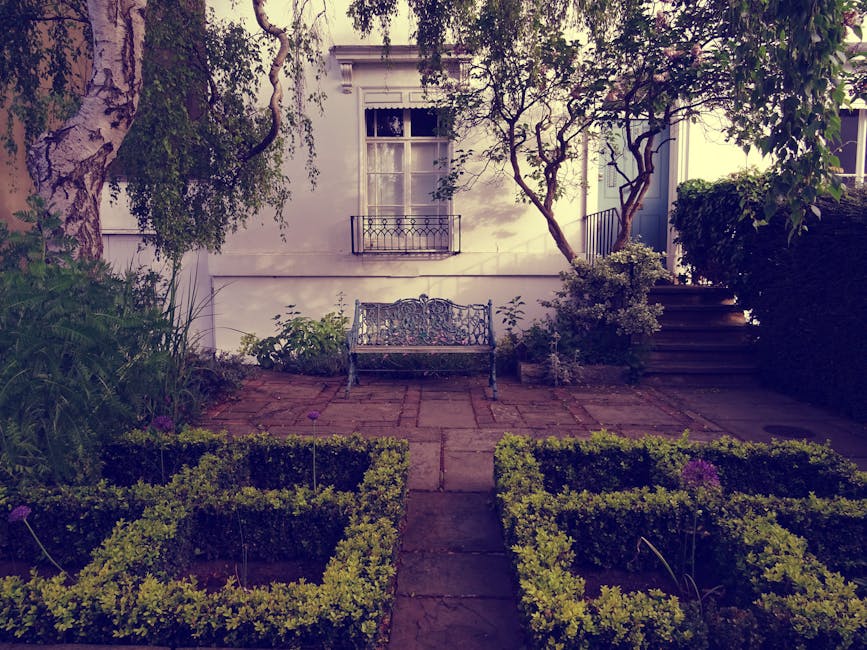
A typical Heston front garden project might start with a narrow plot that feels more like a leftover strip than a proper garden. The path is there, but it does not stand out. The shrubs have grown unevenly. There is some bare soil, a few weeds, and a container or two that look as if they were placed in a hurry and never moved again.
The first step is usually clearance and a bit of honest editing. Remove dead growth. Cut back anything sprawling. Decide which plant, if any, deserves to stay. Then create a cleaner line around the border and a more deliberate route to the door. Suddenly, the space has shape.
Next comes structure. A small evergreen feature near the front boundary, a low-maintenance border planting scheme, and one or two containers near the entrance can create a much stronger look. If the soil is tired, it gets improved. If drainage is poor, that gets addressed before planting goes in. Not glamorous, but necessary.
The final result is not usually dramatic in a flashy sense. It is more subtle than that. The garden looks calmer, the entrance feels more welcoming, and the whole front of the house reads as cared for. You notice it when you arrive home at dusk and the light catches the edges cleanly. That is the moment it works.
And honestly, that quiet improvement is often what people wanted all along.
Practical Checklist
Use this checklist before starting a small front garden makeover in Heston TW5.
- Measure the available space carefully.
- Note where the sun, shade, and wind hit during the day.
- Check soil condition and drainage.
- Decide what the garden must do as well as how it should look.
- Remove dead plants, clutter, and weak features.
- Keep paths and access points clear.
- Choose a limited planting palette for a calmer finish.
- Include evergreen structure for year-round presence.
- Use materials that match the house and frontage.
- Plan for watering, pruning, and seasonal tidy-ups.
- Check for any boundary, access, or estate-related considerations.
- Think about what the garden will look like in winter, not just summer.
Simple rule: if a feature makes the space feel busier without making it more useful, think twice.
Conclusion
A small front garden makeover does not need to be complicated to be effective. In fact, the most successful ones are usually the simplest: clear structure, sensible planting, tidy edges, and a layout that respects how the space is actually used. For homeowners looking for gardeners in Heston TW5, the real value lies in combining design sense with practical upkeep so the garden looks good long after the first tidy-up.
Think of the front garden as a handshake. It does not have to be loud. It just has to be confident, neat, and welcoming. Get that right, and the whole property benefits. A small space can still make a proper statement. Maybe even a lovely one.
If you are ready to improve your frontage, speak with a local team that understands compact London gardens, seasonal maintenance, and the realities of small-space design. Get a free quote today and see how much you can save.
Sometimes the smallest garden changes are the ones you feel every single day.
Frequently Asked Questions
What should I prioritise in a small front garden makeover?
Start with structure and access. A clear path, tidy edges, and a simple planting plan usually make more difference than adding lots of features.
How do I make a tiny front garden look bigger?
Use clean lines, repeated plants, and a limited colour palette. Avoid overcrowding. A little open space often makes the whole garden feel larger.
What plants work well in a small front garden in Heston TW5?
Choose plants that suit the site conditions rather than chasing novelty. Evergreen shrubs, compact perennials, and hardy container plants are often practical choices, especially where space is tight.
Is gravel a good option for small front gardens?
It can be, particularly for low-maintenance schemes, but it needs proper edging and a sensible base. Poorly installed gravel can look messy or shift around over time.
How much maintenance does a small front garden need after the makeover?
Usually less than before, but not none. Expect basic weeding, pruning, watering during dry spells, and seasonal tidy-ups to keep it looking sharp.
Can I improve a front garden without replacing everything?
Absolutely. Many of the best results come from clearing clutter, reshaping borders, refreshing soil, and updating planting rather than starting from zero.
What is the most common mistake people make?
Overfilling the space. In a small front garden, too many plants or materials can make the area feel cramped and harder to maintain.
Do I need a professional gardener for this kind of project?
Not always, but a professional can help if the garden has poor drainage, awkward access, tired planting, or a layout that needs proper rethinking.
How long does a small front garden makeover usually take?
It depends on the scope. A light refresh may take a short visit, while a full redesign with planting and hard landscaping naturally takes longer.
What should I ask before hiring a gardener?
Ask about the proposed plan, plant choices, maintenance needs, waste removal, and whether the work suits your budget and the conditions of the site.
Will a front garden makeover add value to my home?
It can improve kerb appeal and the overall impression of the property, which is useful for both living in the home and presenting it well to buyers or tenants. Exact value changes vary, so it is best to think in terms of presentation and practicality.
What is the best low-maintenance approach for a front garden?
Keep the design simple, choose hardy plants, use mulch or gravel carefully, and avoid features that need constant trimming or replacement. Low maintenance works best when the planting is suited to the site from the start.